The short version: before winter properly sets in, get your gutters cleared, check your roof for slipped or lifted tiles, and deal with any moss now while you can still see what’s underneath it. Most of the emergency callouts we get between November and February in Kildare trace back to one of those three things being ignored in October or early November. A couple of hours sorting it now saves a much worse day later when water is coming through a ceiling in the middle of a storm.
Why Kildare roofs struggle more in winter than people expect
We get asked a lot why a roof that was “grand all summer” suddenly starts causing problems in December. The answer is usually a combination of things that built up quietly over the year finally meeting weather that doesn’t let anything dry out. Kildare doesn’t get the worst of the coastal storms that hit Clare or Kerry, but we do get long, wet, low-pressure spells, and a lot of older housing stock in towns like Naas, Athy and Kildare town with roofs that were never built with modern insulation and ventilation in mind. That combination of moisture and poor drying time is what turns a small issue into a damp patch on the landing ceiling.
The other local factor is trees. Areas like Celbridge, Maynooth and Leixlip have a lot of mature trees close to rooflines, and every autumn those gutters fill with wet leaf litter that doesn’t just block water, it holds moisture against the fascia and encourages rot. We see this pattern every single year on the same streets.
The mistake we see most often
Honestly, the biggest mistake isn’t neglect, it’s timing. People do get their gutters cleared or their roof looked at, but they do it in January after the damage is already done, rather than in October or early November when it would have actually prevented something. Once a storm has driven water back under a slipped tile or overflowed a blocked gutter down the wall, you’re no longer doing prevention, you’re doing repair. Repair costs more, takes longer, and sometimes means dealing with plasterboard or timber that’s already soaked.
If there’s one thing we’d want every Kildare homeowner to take from this article, it’s that the window for genuinely useful pre-winter work is small. Once the first proper storm comes through, you’re reacting instead of preparing.
What to actually check before the storms arrive
You don’t need to get up on the roof yourself to do a sensible first pass. Most of this can be done from the ground with a pair of binoculars, or by walking the perimeter of the house after rain to see where water is going.
- Gutters and downpipes: look for sagging sections, moss or leaf buildup spilling over the edge, and water staining down the brickwork or render below a joint. A gutter that overflows in light rain is already blocked.
- Roof tiles and slates: scan for anything that looks lifted, cracked, or out of line compared to its neighbours. On older Kildare estates with concrete tiles, a slipped tile is one of the most common causes of a leak that appears “out of nowhere” during a storm.
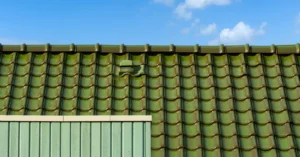
- Moss and algae: a green or dark tinge, especially on the north-facing or shaded side of the roof, holds water against the tiles and speeds up wear. It also tends to block the small gaps tiles need to shed water properly.
- Flashing around chimneys and valleys: these are the spots most likely to let water in, and the first place we’d check on an older house.
- Fascia and soffit boards: soft, discoloured or peeling timber here usually means water has been sitting somewhere above it for longer than it should.
- Downpipe outlets at ground level: make sure they’re not blocked at the bottom, a clear gutter upstairs is no use if the water has nowhere to go once it reaches the ground.
Moss: deal with it now, not after the thaw
Moss on a Kildare roof is almost never just a cosmetic issue. It holds moisture against the tile surface for days after rain instead of letting it run off, and over a winter of freeze-thaw cycles (which we do get, even if briefly) that trapped moisture can work its way into small cracks and make them worse. Thick moss also adds weight, and on older roofs that’s not nothing.
The honest answer on whether you need it removed before winter depends on how established it is. A light dusting of green algae on a north-facing slope is low priority. Thick, cushion-like moss clumps, especially ones you can see sitting proud of the tile line from the ground, are worth sorting before the wet season properly kicks in. We cover this in more detail on our roof moss removal page, including why we don’t recommend pressure washing moss off older or more fragile tiles.
What pushes a pre-winter job up or down in cost
We won’t give you a figure here because every roof is different, but it’s worth knowing what actually moves the cost so you’re not caught off guard when you get a quote.
- Roof pitch and height: steeper, taller roofs take longer and need more safety setup.
- Access: terraced housing with tight side passages in towns like Athy or Naas can add time versus a detached house with clear access.
- How much moss or buildup there is: a light clean is quicker than removing years of thick, established growth.
- Gutter condition: clearing debris is one job, repairing a sagging or damaged section is another.
- Number of storeys and chimneys: more features generally means more time on site.
The only reliable way to know what your job will cost is to get it looked at. We’d always recommend getting a few quotes and asking what’s actually included, particularly whether gutter clearing and a roof inspection are part of the same visit.
What we’d recommend doing yourself, and what to leave to a professional
Clearing debris from ground-level gutters with a stable ladder and someone holding it is reasonable for a lot of homeowners, as long as the house is single storey or you’re genuinely comfortable on a ladder. Getting up on the roof itself, scraping moss, or working near a chimney or valley is where we’d say stop and get someone in. Falls from roofs and ladders are one of the most common causes of serious injury in home maintenance, and a two-storey Kildare semi-d with a steep pitch is not the place to learn that lesson.
If you’re not sure what state your roof is in, a proper inspection before winter is worth far more than guessing. We offer roof cleaning and gutter cleaning across Kildare, including Naas, Newbridge, Celbridge, Maynooth, Leixlip, Kildare town, Athy, Clane, Kilcock and Sallins, and a lot of our autumn work is exactly this kind of pre-winter check rather than emergency repair.
Get it sorted before the first storm
We’ve been doing this work across Kildare long enough to know the pattern repeats every year: the houses that get a proper gutter clear and roof check in October and November tend not to be the ones calling us in a panic during a January storm. If you want a straightforward look at where your roof and gutters stand before the weather turns, have a look at our roof cleaning services or get in touch through our contact page and we’ll tell you honestly what, if anything, needs doing.
Frequently Asked Questions
How often should gutters be cleaned before winter in Kildare?
Once a year before winter is the minimum for most houses, but if you’ve got overhanging trees near the roofline, which is common in parts of Celbridge, Maynooth and Leixlip, twice a year (spring and autumn) is a safer bet.
Can I remove roof moss myself with a pressure washer?
We wouldn’t recommend it. Pressure washers can crack or lift older tiles and strip the granules off asphalt-type tiles, which shortens their life rather than extending it. There are gentler, more controlled methods that clean the roof without damaging the surface.
Do I need planning permission to clean or repair my roof?
Routine cleaning and like-for-like maintenance generally doesn’t require planning permission, but if you’re thinking about anything that changes the roof structure, materials or profile, check the current position with your local authority before work starts.
What’s the first sign a roof has a problem that needs attention before winter?
Watermarks on an internal ceiling, a gutter overflowing in moderate rain, or a tile that looks visibly out of line with the ones around it. Any of these is worth getting checked rather than waiting to see if it gets worse.
Is it worth getting a roof inspection if nothing looks obviously wrong?
Yes, particularly on older homes. A lot of the damage we see starts in places you can’t check from the ground, like flashing around a chimney or the underside of a valley, and catching it early is always cheaper than repairing water damage later.
How far in advance of winter should this checklist be done?
Ideally October through to mid-November. Leaves have mostly fallen by then, so gutters won’t just block up again straight after you clear them, and you’ve still got a dry spell or two to get any roof work done before the heavier storms set in.